
Supplier Quality Manual Revision: Release Date:
Supplier Quality Manual Revision: AT. Released: Aug 25, 2014 http://supplier.methode.com/ Cover Page NA Automotive Supplier Quality Manual Revision: AT Release Date: August 25, 2014 Approved By: Supplier Quality Manager Date Unsigned, printed copies are not controlled. SM 1.200 Supplier Quality Requirements 1 of 48 Unsigned, printed copies are not controlled Supplier Quality Manual Revision: AT. Released: Aug 25, 2014 http://supplier.methode.com/ S Coonntteennttss M 11..110000 TTaabbllee ooff C SM General Business: No. SM 1.200 Title Supplier Quality Requirements Product Development: No. SM 2.100 SM 2.200 SM 2.300 Title PPAP Requirements - DV Shipping Label for Purchasing Samples Advanced Product Quality Planning (APQP) Pre-Production: No. SM 3.100 SM 3.160 Title Production Part Approval Process (PPAP) Methode Request for Change (RFC) Production: No. SM 4.100 SM 4.150 SM 4.200 SM 4.300 SM 4.500 SM 4.600 Title Methode Concerns and Supplier Response Containment Methode Receiving Inspection Methode Supplier Performance Report Supplier Shipping Requirements Schedule & Releases Post Production: No. Title Forms for Supplier Use: No. SMF 1.200.1 SMF 2.200.1 SMF 2.200.2 SMF 2.300.1 SMF 3.100.1 SMF 3.100.3 SMF 3.100.4 SMF 3.100.6 SMF 3.100.7 SMF 3.100.8 SMF 3.100.9 SMF 3.160.1 SMF 4.100.1 SMF 4.100.2 SMF 4.100.3 SMF2.300.20 SMF 4.600.1 SMF 4.600.2 NAA-MQ-01 Title Startup and Shutdown LPA Questions Shipping Label for Sample Parts (Rev Rel) MX Shipping Label for Sample Parts (Rev Rel) Supplier Process Characteristic Analysis Supplier PPAP Checklist & Review PPAP Dimensional Results Packaging Approval Report Example of IMDS Initial Sample Report LNDD form Part Submission Warrant (PSW) Certificate of Non-Use Methode Request for Change (RFC) Corrective Action Report (CAR) Supplier Sorting Instructions Corrective Action Report Checklist Safe Launch Plan Schedule & Release Questionnaire Obsolescence Claim Form Controlled Shipment Letter (Rev Release) SM 1.200 Supplier Quality Requirements 2 of 48 Unsigned, printed copies are not controlled Supplier Quality Manual Revision: AT. Released: Aug 25, 2014 http://supplier.methode.com/ S meennttss Reeqquuiirreem Quuaalliittyy R Suupppplliieerr Q M 11..220000 S SM A) Quality Management System: 1) Suppliers are required to be registered to one of the following Quality Management Systems: a) ISO 9001:2008 (minimum registration). b) ISO/TS 16949:2009 (conformity recommended, registration preferred). Note: A supplier can remain at current edition until the recertification and at that time they would be audited to the new edition. 2) It is the supplier’s responsibility to ensure current copies of upgraded or renewed certifications are forwarded to Methode Supplier Development. B) AIAG Manuals: 1) Suppliers are required to comply with current AIAG manuals. For items that are not covered in Methode’s Supplier Quality Manual, a supplier should refer to these manuals for direction and clarification: a) b) c) d) e) APQP (Advance Product Quality Planning and Control Plan) FMEA (Potential Failure Mode and Effects Analysis) MSA (Measurement Systems Analysis) PPAP (Production Part Approval Process) SPC (Statistical Process Control) C) Material Identification: 1) The supplier shall establish and maintain an effective system for the control of all material. 2) Lot number traceability must be identified on the shipping label and any accompanying data (i.e.: SPC, CpK, PpK, etc…) 3) See also: SM 4.500 Shipping Requirements. D) Other Standards: 1) Engineering Drawings: Methode engineering drawings are made according to the American Society of Mechanical Engineers standard ASME Y14.5M-1994. Please use this standard to understand the requirements documented in Methode drawings. 2) Molded and Decorated Parts: General appearance evaluations shall be conducted according to the Cosmetic Specifications of Injection Molded Parts published by the Society of the Plastics Industry, Inc. and Methode Visual Quality Standard. 3) Electronics and Printed Circuit Boards: Quality assurance and visual acceptance of unpopulated printed circuit boards shall be based on the IPC-A-600 industry standard. Quality assurance and visual acceptance of electronic assemblies shall be based on the IPCA-610 industry standard. SM 1.200 Supplier Quality Requirements 3 of 48 Unsigned, printed copies are not controlled Supplier Quality Manual Revision: AT. Released: Aug 25, 2014 http://supplier.methode.com/ E) Supplier Surveys and Selection Process: 1) Supplier Phone Interview: A short telephone interview to begin the process of sourcing possible new suppliers. 2) Supplier Pre-Survey: This is a supplier self survey that is used to further determine supplier eligibility as an Approved Supplier. Any supplier location that receives a Pre-Survey is expected to complete and return it to Methode in a timely manner. 3) Supplier Site Survey: Any supplier location may be surveyed for compliance to Methode requirements at a frequency to be determined by Supplier Development or Purchasing. A score of 80% or higher indicates that a supplier meets Methode benchmark expectations. A supplier who achieves a numerical score of 80% or higher on the survey may be considered for Approved Supplier status. Suppliers of non-critical components may receive Approved Supplier status without having a survey conducted at their location. The results of this survey may not be an indication of future business decisions. F) Supplier Shut-Down and Start-Up: 1) In a recent analysis, one of Methode's customers noticed a seasonal pattern pertaining to yard holds, noting significant increases in February and August, when compared to other months. They feel that this is a result of temporary plant shutdowns, and may be attributed to things such as changes in operators, different materials, or adjustments made during maintenance activities. 2) As a preventative measure, a set of questions have been created that must be addressed during your shut-down and start-up situations. These questions are aimed at exposing the common types of risk that occur during normal shut down and startup periods. The intent is to ensure that plant management is aware of the risks, and can take appropriate actions to minimize them. 3) See also: SMF 1.200.1 Startup and Shutdown LPA Questions. G) Written Language: 1) Any written reports submitted to Methode shall be in English or contain English translations. H) Sub-Supplier Requirements: 1) Suppliers of Methode Electronics shall have capabilities to manage their respective suppliers, (regardless of how directed). This includes APQP and periodic auditing. Methode may, when deemed necessary, audit the critical processes of the supplier and sub-suppliers to assure that proper controls are in place throughout the entire supply chain. SM 1.200 Supplier Quality Requirements 4 of 48 Unsigned, printed copies are not controlled Supplier Quality Manual Revision: AT. Released: Aug 25, 2014 http://supplier.methode.com/ S V DV meennttss –– D Reeqquuiirreem PR AP PA PP M 22..110000 P SM The PPAP requirements for all DV (Design Verification) components are simple. Submit the following PPAP elements unless other PPAP elements are specified on the Purchase Order or accompanying SMF 3.100.1 PPAP Checklist & Review. A) Part Types: 1) The Purchase order will indicate the sample type (DV Samples) and part type as listed below: Part Type Description Designed Part Non-Designed Part Non-Designed Family Part Part has a drawing with detailed requirements Shelf or catalog item, commodity item, etc… Non-designed parts that have multiple versions B) Element Requirements for Level IV PPAP: 1) Once the part type is identified, the required PPAP elements are identified in the table below: PPAP Elements Design Part Non-Design Part & Non-Design Family Part 1. Designed Record Methode approved drawing and/or signed marked up drawing and/or CAD files. 9. Dimensional Results a) All Dimensions b) One sample per cavity Refer to AIAG PPAP 2.2.10 for requirements Copy of page from catalog, Data Sheet, Supplier Drawing and/or Methode-approved drawing, if available. None required. 10. Material, Performance Test Results 11. Initial Process Study 18. PSW 14. Sample Product SM 2.100 PPAP Requirements – DV None required. a) For “Reason for Submission”, record “OTHER” b) For “Submission Level”, record “Level IV” c) For the “Production Rate per 8 Hours”, in the Declaration, record “n/a” for “not applicable” d) For the “Explanation/Comments”, record “DV Samples” e) For “Purchase Order No.”, record the number of Methode’s Purchase Order. a) Quantity of one each cavity 5 of 48 None required. None required. a) For “Reason for Submission”, record “OTHER” b) For “Submission Level”, record “Level IV” c) For the “Production Rate per 8 Hours”, in the Declaration, record “n/a” for “not applicable” d) For the “Explanation/Comments”, record “DV Samples” e) For “Purchase Order No.”, record the number of Methode’s Purchase Order. a) Quantity of one. b) Contained in a zip lock bag. Unsigned, printed copies are not controlled Supplier Quality Manual Revision: AT. Released: Aug 25, 2014 http://supplier.methode.com/ 17. b) Contained in a zip lock bag a)IMDS a)IMDS b)Completed SMF 3.100.7 LNDD form C) Submission: 1) Ship the quantity of purchasing sample parts requested on the Purchase Order along with the PPAP samples in a zip lock bag to Methode, note the PPAP must be e-mailed, before the date required indicated on the Purchase Order, indicate that has been done in your e-mail. 2) Place the Shipping Label for Sample Parts on both the bag(s) as well as the container of parts. DO NOT USE A METHODE PRODUCTION LABEL. See SM 2.200 Shipping Labels for Sample Parts for additional details about this label. SM 2.100 PPAP Requirements – DV 6 of 48 Unsigned, printed copies are not controlled Supplier Quality Manual Revision: AT. Released: Aug 25, 2014 http://supplier.methode.com/ S mpplleess Saam Puurrcchhaassiinngg S Shhiippppiinngg LLaabbeell ffoorr P M 22..220000 S SM Inputs: Outputs: Computer Internet Connection • Word Program • Common Printer • Computer file: SMF 2.200.1 Shipping Label for Sample Parts Shipping Label for Sample Parts A) Process: 1) Go to Methode’s Supplier Quality Manual web site: http://supplier.methode.com/ a) Download the SMF 2.200.1 Shipping Label for Sample Parts file. (See Inputs section above) or SMF 2.200.2 MX Shipping Label for Sample Parts file if you are shipping samples directly from a Mexico location. b) Open the file with Word. c) Complete each data field on each label. NOTE: Use your Purchase Order to determine the type of sample (DV, PV or Engineering). d) Print a label for each bag/carton. 2) Attach a label to each bag/carton 3) DO NOT ATTACH A PRODUCTION LABEL! See SM 4.500 Shipping Requirements for production labels. FROM: PART NO. PRL / DCL MFG. DATE NO. OF PCS. NO. OF CAVITIES PURCHASE ORDER # / TO: 3801 W. Military Hwy McAllen, Texas 78503 DV Samples (Prototype) PV Samples (Supplier PPAP) Eng. Samples (Prototype) Interim Rejected Methode Use Only Approved SM 2.200 Shipping Label for Purchasing Samples 7 of 48 Unsigned, printed copies are not controlled Supplier Quality Manual Revision: AT. Released: Aug 25, 2014 http://supplier.methode.com/ S Pllaannnniinngg)) Quuaalliittyy P Prroodduucctt Q Addvvaannccee P P ((A QP PQ AP M 22..330000 A SM All suppliers will use the Advances Product Quality Planning and Control Plan (APQP) and Potential Failure Mode and Effects Analysis (FMEA) reference manuals provided through AIAG for all Methode components. This provides additional guidelines for preparing plans and checklists for ensuring that APQP is being carried out at our suppliers. A) PFMEA: 1) Process Failure Mode and Effects Analysis (PFMEA) a) A PFMEA should be conducted during product quality planning and before beginning production. It is a disciplined review and analysis at a new/revised process and is conducted to anticipate, resolve, or monitor potential process problems for a new/revised product program. A PFMEA is a living document and must be reviewed and updated as new failure modes are discovered. b) When properly utilized, a PFMEA will assure proper actions and controls are utilized to protect both the supplier and the customer. c) PFMEA’s create a tool to provide “Lessons Learned” and history towards future planning. d) In order to develop an effective PFMEA, the critical characteristic list is the most important component. 2) Special Characteristic Classification: a) All products and processes have features described by characteristics that are important and need to be controlled. However, some characteristics require special controls to minimize the risk of adverse consequences. b) Special Characteristics involve those product and / or process characteristics that affect vehicle or process safety, compliance with government regulations, or customer satisfaction. For Special Characteristic, manufacturing processes must be controlled to ensure product will meet all engineering requirements as well as requirements for operator safety. Daimler AG and Chrysler Group LCC <S> = Shield; also ,<E> = Emissions Product Safety, Vehicle Emissions <D> = Diamond Critical Ford FMEA Type Process Classification Process ∇ CC SC Process HI Process OS SM 2.300 APQP (Advance Product Quality Planning) To Indicate Criteria Action Required A Critical Characteristic A Significant Characteristic High Impact Severity = 9, 10 Special controls may be necessary Special controls may be necessary Special controls may be necessary Special controls may be necessary Operator Safety 8 of 48 Severity = 5 – 8 and Occurrence = 4 – 10 Severity = 5 – 8 and Occurrence = 4 – 10 Severity = 9, 10 Unsigned, printed copies are not controlled Supplier Quality Manual Revision: AT. Released: Aug 25, 2014 http://supplier.methode.com/ 3) General Rules for Rating: a) Reducing the Severity rating can only be accomplished by a design change and/or a process change. b) Reducing the Occurrence and Detection ratings cannot be accomplished by redundant visual inspection. Error-Proofing is the only method for reduction. c) Operator-dependant inspections should always be a consideration for error-proofing. d) Assure those actions taken and controls are not costly, reactive and detrimental to quality improvements. e) No RPN thresholds to determine recommended actions. Continuously improve the PFMEA through reviews for concerns as well as addressing the 3 highest rated RPN values on an ongoing basis. (The 3 highest RPN’s is a minimum requirement and is recommended to occur at a minimum of once per year.) f) The initial emphasis should be on Severity. All Severity rankings of 9 and 10 should be addressed with a consideration to error-proofing. g) Special attention must be given when evaluating the SOD. h) Supplier develops recommended actions to eliminate potential failure modes based on the following priority: 1) Highest severity items 2) Highest criticality (Severity x Occurrence) 3) Highest RPN (Severity x Occurrence x Detection) Actions are recorded and when completed, the Revised Severity, Occurrence and Detection columns are completed, even if the values did not change. i) Severity Evaluation Criteria: (a) (b) (c) (d) ii) The Voice of the Customer (VOC) Update the CCL considering VOC applications for Form, Fit and Function. Customer Plant assembly methods SFMEA/DFMEA Review, if available Occurrence Evaluation Criteria (a) This is based on data collected from experience, data from like products, previous quality concerns, etc… iii) Detection Evaluation Criteria: (a) When using these evaluation criteria, make sure to apply the Inspection Types listed at the bottom of the page. A. Error-proofed B. Gauging C. Manual / Visual Inspection Suggested range of Detection Methods Suggested range of Detection Methods Suggested range of Detection Methods Ranking 1, 2, 3, 4 Ranking 2, 3, 4, 5, 6 Ranking 6, 7, 8, 9, 10 4) Document Linkages: a) During development and revisions, document linkages must be maintained. This means that starting with the Flow Chart, FMEA and Control Plans must follow the steps outlined SM 2.300 APQP (Advance Product Quality Planning) 9 of 48 Unsigned, printed copies are not controlled Supplier Quality Manual Revision: AT. Released: Aug 25, 2014 http://supplier.methode.com/ in the Flow Chart. The Flow Chart must start with receiving of material, include material movements, processing and end with shipment of end product. b) When corrective actions are required, the FMEA should be the first document reviewed and then supporting documents. It should be reviewed to ensure the concern was addressed, and if not, it must be updated to include the issue. It is recommended that the CAR# is reflected in the FMEA to obtain history and assure future “Lessons Learned” data. 5) Pass-Thru Defect: a) Definition: i) Any Characteristic or Feature that is not inspected, checked or used at one point in manufacture and is then passed through to the next user, operation or facility in the line of manufacture. In other words, any feature not used by you. If, during the course of manufacture, a characteristic or feature is made defective, the defect will then be passed on through your system undetected and may reach the customer. This defect may be created by a purchased part or be a part made and assembled by you. b) Objective: i) Identify assembly process or testing limitations that could result in a risk to the next operation or the final customer. Pass thru sensitivity analysis also provides an understanding of where and when each component, assembly, sub-assembly or subsystem is tested or validated during the manufacturing process. 6) Supplier Process Characteristic Analysis: a) SMF 2.300.1 Supplier Process Characteristic Analysis form has been developed as an aid to verify the critical and pass thrus on the PFMEA. Instructions to complete this form are included with the form. The approved form must be included in the initial PPAP. B) Control Plan: 1) Definition: a) Written description of the systems for controlling parts and processes. 2) Overview: a) The purpose of this Control Plan methodology is to aid in the manufacture of quality products according to customer requirements. It does this by providing a structured approach for the design, selection and implementation of value-added control methods for the total system. Control Plans provide a written summary description of the systems used in minimizing process and product variation. b) The Control Plan is maintained and used throughout the product life cycle. Early in the product life cycle its primary purpose is to document and communicate the initial plan for process control. Subsequently, it guides manufacturing in how to control the process and ensure product quality. Ultimately, the Control Plan remains a living document, reflecting the current methods of control, and measurement systems used. The Control Plan is updated as measurement systems and control methods are evaluated and improved. SM 2.300 APQP (Advance Product Quality Planning) 10 of 48 Unsigned, printed copies are not controlled Supplier Quality Manual Revision: AT. Released: Aug 25, 2014 http://supplier.methode.com/ 3) Product: a) Product Characteristics are the features or properties of a part, component or assembly that are described on drawings or other primary engineering information. The Methode Core Team should identify the Special Product Characteristics that are a compilation of important Product Characteristics from all sources. All Special Characteristics must be listed on the Control Plan. In addition, the manufacturer may list other Product Characteristics for which process controls are routinely tracked during normal operations. 4) Process: a) Process Characteristics are the process variables (input variables) that have a cause and effect relationship with the identified Product Characteristic. A Process Characteristic can only be measured at the time it occurs. The Methode Core Team should identify Process Characteristics for which variation must be controlled to minimize product variation. There could be one or more Process Characteristics listed for each Product Characteristic. In some processes, one Process Characteristic may affect several Product Characteristics. 5) Special Characteristic Classification: a) Use the appropriate classification as required by the OEM to designate the type of special characteristic. Customer may use unique symbols to identify important characteristics, such as those that affect customer safety, compliance with regulations, function, fit, or appearance. These characteristics are variously termed "Critical", "Key", "Safety", or "Significant". SM 2.300 APQP (Advance Product Quality Planning) 11 of 48 Unsigned, printed copies are not controlled Supplier Quality Manual Revision: AT. Released: Aug 25, 2014 http://supplier.methode.com/ S P)) AP PA PP Prroocceessss ((P Apppprroovvaall P Paarrtt A Prroodduuccttiioonn P M 33..110000 P SM A) Reference: 1) Unless otherwise directed in this manual, reference the Automotive Industry Action Group th (AIAG) manual, Production Part Approval Process (PPAP), 4 Edition for any questions regarding PPAP submittal to Methode. 2) See also SM 2.100 DV PPAP Requirements. B) Methode Part Numbering System: 1) Use the part number listed on your Purchase Order for PPAP purposes. 2) As an explanation that will work for most of Methode's components, the following has been included: a) In general, Methode's part numbers are comprised of five (5) elements: i) Prefix: Single character (letter or number) used by Methode to identify part origin or type. ii) Drawing Number: As found on the design record iii) PRL: Part Revision Level as found on the design record in the revision block iv) Suffix 1: The "dash" number identifying a unique part on a family drawing v) Suffix 2: Letter to identify part destination within Methode. Part numbers that differ only in Suffix 2 do not signify different PPAP requirements, only part destination. Therefore, only one PPAP is needed for all part numbers that differ only in Suffix 2. b) Using the part number 517643XA2M as an example: 5 1 7 6 4 3 X A 2 M 5 is the prefix 17643 is the drawing number XA is the PRL 2 is the “suffix 1” M is the “suffix 2” c) Please note that Methode's drawing revision, or engineering change level, is called "DCL", or Document Change Level. C) PPAP Elements: 1) Design Record: a) Use the drawing that Methode supplies. If you did not receive this drawing, contact your Purchasing agent. b) Review the drawing carefully. If there are any issues, contact your Purchasing agent immediately. c) It is the responsibility of the supplier to balloon the drawing, unless the drawing was preballooned by Methode. d) All numbers used for ballooning must be circled. SM 3.160 Methode Request for Change 12 of 48 Unsigned, printed copies are not controlled Supplier Quality Manual Revision: AT. Released: Aug 25, 2014 http://supplier.methode.com/ i) ii) iii) iv) v) vi) vii) viii) Regular Dimensions. Reference Dimensions. Basic Dimensions. Material Specifications. Performance Specifications. Appearance Requirements. Geometric Dimensioning and Tolerancing (GD&T) specifications. Drawing Notes. e) Use the same correlation of balloon number to dimension/specification on any re-checks and revision checks, adding and dropping numbers as needed. When adding a balloon, use the next available number in sequence. When dropping balloons, you must write on the drawing the balloon number and the word "dropped" next to it. f) For all dimensions with multiple locations, identify all feature locations on the drawing so there is correlation to the dimensional results. The following example (holes labeled a, b and c) illustrates one of many possible methods to identify each feature to its associated dimensional result. Ballooned Drawing Identifying Dimensions with Multiple Locations (Items in GREEN would be added in the ballooning process) 1 a b 3X Ø5.0 ± 0.2 SC 2 15.0 c 3 17.0 NOTES: 1. Refer to master model for all unspecified dimensions. (See chart for tolerances) 2. Mold taper to be worked within limits on tolerance dimension. Otherwise 1° per side maximum. 3. Location of gates, parting lines, ejector pins, and cavity no. to be approved by Methode engineering prior to tooling. 4. Part to be free of flash and objectionable surface flaws. 5. Ejection pin marks to be flush to 0.13mm below surface. 6. Cavities to be identified by number or letter. Associated Dimensional Results Dim # 1a 1b 1c 2 3 Note 1 Note 2 Note 3 Note 4 Note 5 Note 6 Drawing Specification 3X Ø5.0 ± 0.2 15.0 17.0 Unspecified Dimensions Mold Taper Approved prior to tooling Free of flash/surface flaws 0 - 0.13mm Cavity ID SM 3.160 Methode Request for Change Sample 1 #.# #.# #.# ##.# ##.# OK OK Yes OK 0 A 13 of 48 Sample 2 #.# #.# #.# ##.# ##.# OK OK Yes OK -0.04 B Sample 3 #.# #.# #.# ##.# ##.# OK OK Yes OK -0.07 C Sample 4 #.# #.# #.# ##.# ##.# OK OK Yes OK -0.05 D Sample 5 #.# #.# #.# ##.# ##.# OK OK Yes OK 0 E Sample 6 #.# #.# #.# ##.# ##.# OK OK Yes OK -0.03 F Unsigned, printed copies are not controlled Supplier Quality Manual Revision: AT. Released: Aug 25, 2014 http://supplier.methode.com/ g) Submit the ballooned drawing and retain a copy for your records. 2) Authorized Engineering Change documents, if applicable: a) Required for all change requests at initial PPAP and afterwards, including changes requested at launch, during production, and during subsequent changes to the drawing PRL or DCL, to include: 1. Design changes 2. Process changes 3. Manufacturing location changes 4. Internal tool location changes 5. New or additional tooling 6. Material changes b) Approved Request for Change (RFC) must be signed and dated by Change Management. c) See also: SM 3.160 Methode Request for Change. 3) Customer Engineering Approval, if applicable: a) Approved Request for Change (RFC) must be signed and dated by Change Management. b) See also: SM 3.160 Methode Request for Change. 4) Design Failure Mode and Effects Analysis (DFMEA), if applicable: a) DFMEA is only required if the supplier is design-responsible. 5) Process Flow Diagram: a) Process Flow Diagram clearly describing the production process steps and sequences, and meeting the specified customer needs, requirements and expectations. b) Process Flow Diagrams for "families" of parts are acceptable, if the new parts have been reviewed for commonality. c) Numbering system must match the corresponding production process steps and sequence numbers shown on the PFMEA and Control Plan. d) Shall follow the AIAG Advanced Product Quality Planning and Control Plan guidelines. 6) Process Failure Mode and Effects Analysis (PFMEA): a) A single Process FMEA may be applied to a process manufacturing a family of similar parts or materials if reviewed for commonality. b) Numbering system must match the corresponding production process steps and sequence numbers on the Process Flow Diagram and Control Plan. c) Shall follow the AIAG Potential Failure Mode and Effects Analysis (FMEA), th 4 Edition guidelines. d) Is a living document and must be reviewed and updated as new failure modes are discovered to ensure protection of both the supplier as well as the customer. e) It must be effective. SM 3.160 Methode Request for Change 14 of 48 Unsigned, printed copies are not controlled Supplier Quality Manual Revision: AT. Released: Aug 25, 2014 http://supplier.methode.com/ 7) Control Plan: a) Defines all methods used for process control and complies with customer-specified requirements. b) A single Control Plan for "families" of parts is acceptable if the new parts have been reviewed for commonality. c) Numbering system must match the corresponding production process steps and sequence numbers on the Process Flow Diagram and PFMEA. d) Shall follow the AIAG Advanced Product Quality Planning and Control Plan guidelines. e) Is a living document, reflecting the current methods of control and measurement systems used, and should be updated as measurements systems and control methods are evaluated and improved. f) It must be effective. Note: For Designed Part New Launches a Safe Launch Plan must be documented and included in the PPAP submission package. SMF 2.300.20 Safe Launch Plan. 8) Measurement System Analysis Studies: a) Each Initial Process Study must have a Gage R&R included in the PPAP submission. b) Gage R&R must be conducted for each SC unless otherwise directed by Methode Quality Engineering. c) Each Gage R&R must be identified with the corresponding drawing balloon number. d) For Gage R&R acceptability criteria reference AIAG Measurement System Analysis th (MSA), 4 Edition, Chapter II - Section D, Analysis of the Results (pp. 77). e) Attribute GR&R’s must be included for all decorated parts [painting, pad printing, laser etching]. 9) Dimensional Results: a) Measure the appropriate quantity of samples for the type of tooling as listed below: Type of Tooling: Quantity of Samples: Single Cavity *, Progressive Die, etc. 6 2 to 8 Cavities * 3 per Cavity * > 8 Cavities * 1 per Cavity * * Cavity could also mean a die, pattern or assembly line. b) Record results on Methode form SMF 3.100.3 PPAP Dimensional Results Available at http://supplier.methode.com/ i) Complete the header section: (a) (b) (c) (d) (e) (f) (g) (h) ii) Part Number. Description. PRL. DCL. Cavity. Signature. Date. Etc…. For each balloon number, complete the following on a separate row: SM 3.160 Methode Request for Change 15 of 48 Unsigned, printed copies are not controlled Supplier Quality Manual Revision: AT. Released: Aug 25, 2014 http://supplier.methode.com/ (a) Write the balloon number in the "DIM NO." column. (b) Transfer the associated dimension/specification from the drawing to the "DRAWING SPECIFICATION" column. (c) Measure the associated feature on every sample (i) While reference dimensions are not acceptance criteria, measure and document the associated feature for informational purposes only. (ii) While basic dimensions are not acceptance criteria, measure and document the associated feature for better comprehension of GD&T results. (d) Record your measurements in the columns labeled Sample 1 - 6. (e) Record the method of measurement in the columns labeled Method of Inspection. (f) If the results meet the specification, place an "X" in the OK column, otherwise place an "X" in the NOT OK column. OK / Not OK must be marked for every dimension/specification. (g) Sign and date the form (electronic signature is acceptable). iii) Submit the completed forms and retain copies for your records. (h) Contact Methode to get approval to use your own form. Note all items above must be covered. 10) Records of Material / Performance Test Results: a) Material Test Results are required for all parts and product materials when chemical, physical, or metallurgical requirements are specified by the design record or Control Plan. i) th Reference AIAG Production Part Approval Process (PPAP), 4 Edition, and section 2.2.10.1 for requirements. b) Performance Test Results are required for all parts or product materials when performance or functional requirements are specified by the design record or Control Plan. i) th Reference AIAG Production Part Approval Process (PPAP), 4 Edition, and section 2.2.10.2 for requirements. In addition, they must record: c) Material Test Results are required on all materials and plating. They must record: i) The appropriate automotive specification, as shown on the drawing. ii) Complete testing results (current within 9 months) iii) Methode's part number and corresponding drawing balloon number. d) All reports must be legible and in English or contain English translations. e) A general Certificate of Compliance is unacceptable. Test results must be included. (i.e.: Certificate of Analysis). SM 3.160 Methode Request for Change 16 of 48 Unsigned, printed copies are not controlled Supplier Quality Manual Revision: AT. Released: Aug 25, 2014 http://supplier.methode.com/ 11) Initial Process Studies: i. Required for each Special Characteristic (SC) on the design record. Supplier might define these internally when SC’s are not call out on Design Record. Must include the corresponding drawing balloon number. Shall be based on a minimum of 25 subgroups containing at least 100 readings. Submit your readings along with calculated results. In each study, combine all unique production processes (i.e.: duplicate assembly line and/or work cell, each position of a multiple cavity die, mold, tool or pattern.). Studies of individual cavities/patterns are required to be submitted as information only. Acceptance or Rejection is dependent upon the combined cavity report. Exception: In the case of bimodal distributions, evaluation by combined PpK is not appropriate. Bimodal distributions (caused by parallel process steps, separate cavities, etc) should be analyzed separately. In these cases, acceptance criteria will be based on individual cavity/pattern PpK. For special characteristics at multiple locations, the readings from similar locations may be combined into one study. For example, with a dimension for some holes as 5X Ø5.5 ± 1.10 SC, there could be one capability study that combines the readings on all five holes per sample and has at least 25 samples. PpK of 1.67 is the minimum acceptable value for each study. Each study shall display the distribution of the date. Possible display techniques include, but are not limited to, a histogram or a normal probability plot. The index for estimating process capability or performance will be agreed upon by the customer and supplier. PpK is described above, but other methods more appropriate for certain processes or products may be substituted with prior customer approval. ii. iii. iv. v. vi. vii. viii. ix. 12) Qualified Laboratory Documentation: i. When inspection and testing for PPAP is performed by a qualified laboratory (internal or external): i. The qualified laboratory must have a laboratory scope and documentation that the laboratory is qualified for the type of measurements or tests conducted. A copy of this documentation must be included in the PPAP submission. ii. Test results shall be submitted on the laboratory letterhead or the normal laboratory report form identifying the laboratory name, test dates, and the standards used to perform the tests. 13) Appearance Approval Report (AAR): i. AAR typically only applies for parts with color, texture (grain), or surface appearance requirements. Some typical wording on a Methode drawing to note AAR requirements: ii. i. ii. iii. iv. v. iii. Class A surface. Gloss or polish. Texture, stipple, etching. A specific color specification number. Etc…. First shots for each step in the Appearance Approval process (i.e.: unpainted, painted, etched, etc…) shall be submitted to Methode, along with your completed AAR form for approval, documenting progression or improvement. Your engineering contact will indicate the sample quantity and shipping location. If you have a part that is difficult to SM 3.160 Methode Request for Change 17 of 48 Unsigned, printed copies are not controlled Supplier Quality Manual Revision: AT. Released: Aug 25, 2014 http://supplier.methode.com/ measure, you may also need to submit a painted plaque for color and/or gloss measurements. IMPORTANT: Samples for AAR approval must be randomly selected from accepted product. We will use the samples to build our finished assembly for our Customer. We will submit an AAR for our Customer to approve. Once our Customer approves Methode's AAR, we will approve your AAR. AAR's, complete with disposition and authorized customer representative signature, shall accompany the PPAP submission. iv. v. vi. vii. 14) Sample Production Parts: i. SAMPLES, FROM YOUR DIMENSIONAL RESULTS SHALL ACCOMPANY THE PPAP SUBMISSION. If the measurement process requires destroying the samples, include the quantity of "whole" samples as outlined in SM 3.100.C.9 Dimensional Results. Samples must be bagged, with the following information on the bag: ii. iii. i. ii. iii. iv. v. vi. iv. v. vi. vii. Methode Part Number Revision Level Supplier Name Cavity Number Material used Date of Manufacture Each bag must be affixed with a fully completed SMF 2.200.1 or SMF 2.200.2 [as applicable] Shipping Label for Sample Parts clearly identifying what part, what engineering change the represent, and piece quantity per bag. Each carton containing bagged and labeled samples must also be affixed with a fully completed SMF 2.200.1 Shipping Label for Sample Parts clearly identifying what part, what engineering change they represent, and the piece quantity per carton. Additional relevant information (new material, etc…) should be included below the Purchase Order #. Sample parts must be shipped in a manner where their arrival coincides as close as possible with the arrival of the PPAP documentation. 15) Master Sample: i. Master Samples must be retained per the above referenced AIAG PPAP manual. 16) Checking Aids, if requested: i. ii. iii. The supplier shall certify that all aspects of the checking aid agree with part dimensional requirements, and documents all released engineering changes that have been incorporated in the checking aid at the time of submission. Can include fixtures, variable and attribute gauges, models, templates, etc… Inspection Methods must be included in the PPAP package. SM 3.160 Methode Request for Change 18 of 48 Unsigned, printed copies are not controlled Supplier Quality Manual Revision: AT. Released: Aug 25, 2014 http://supplier.methode.com/ 17) Customer Specific Requirements: i. For initial PPAP submissions, the following items must be included: i. International Material Data System (IMDS) Initial Sample Report (see SMF 3.100.6.) (a) In the IMDS system, all materials used for automotive manufacture are archived and maintained. Only in this way is it possible to meet the obligations placed on automobile manufacturers, and thus on their suppliers, by national and international standards, laws and regulations. (b) Use their website (http://www.mdsystem.com/index.jsp) to register your part. (c) Once you have registered your company with IMDS, part specific information must be entered. The process for each part is outlined below. (i) It is the supplier's responsibility to submit into the IMDS system a proposal for Methode's approval. Methode's IMDS identification number is 2464. (ii) Methode will accept or reject your proposal within IMDS. (iii) If accepted, print the IMDS Initial Sample Report and include it with your PPAP submission. Your data will be rolled into our top level BOM. (iv) If rejected, read the comments of the rejection and correct your proposal in the IMDS system. If you do not understand the rejection comments, contact Methode's IMDS coordinator. ii. iii. Material Safety Data Sheet, if applicable: SMF 3.100.4 Packaging Approval Report: (a) It is the supplier's responsibility to select adequate packaging (bulk, layer, cell, individually wrapped, etc…) to ensure components are shipped and received to the specification on the drawing. (b) Submit SMF 3.100.4 Supplier Packaging Approval Form along with pictures to illustrate empty packaging, full packaging and a full skid to Methode’s Packaging coordinator. Once approved, a copy will be sent to the supplier. (c) The SMF 3.100.4 Supplier Packaging Approval Form, complete with disposition and authorized customer representative signature, shall accompany the PPAP submission. (d) Include an example of the box label to be applied to the boxes. iv. AIAG-CQI Requirements: (i) Suppliers of shall provide evidence of the system assessment below as part of the PPAP Requirements as applicable to the process performed: Heat-treated components shall complete the System Assessment AIAG-CQI-9. Plating components shall complete the System Assessment AIAG-CQI-11. Coating components shall complete the System Assessment AIAG-CQI-12. Welding components shall complete the System Assessment AIAG-CQI-15. Soldering components shall complete the System Assessment AIAG-CQI-17. Each year, the Supplier shall perform a self-audit. Upon request the Supplier shall provide all audit results including documentation and action plans. Download CQI Requirements and System Assessments from Methode’s link to the Supplier Quality Manual http://supplier.methode.com/ SM 3.160 Methode Request for Change 19 of 48 Unsigned, printed copies are not controlled Supplier Quality Manual Revision: AT. Released: Aug 25, 2014 http://supplier.methode.com/ v. In support of Sony’s Green Procurement activities, the following applies to the approval of parts, raw material, and sub materials delivered to Methode Electronics, Inc. for use in the manufacturing/delivery of product for/to Sony Corporation or a Sony affiliated company. If a supplier’s product is subject to this requirement, it will be indicated on the Purchase Order provided by Methode. Reference Sony’s requirement SS-00259-01 latest rev accessed at: NOTE COPY THE LINK TO YOUR BROWSER (http://www.sony.net/SonyInfo/procurementinfo/ss00259/index.html). Sony parts should not contain any substances which are specified in SS0259-01. Supplier must purchase recycled resins and coated wire only from business partners that Sony approves as Green Partners.Verification such be carried out per the following: i. Verification of parts and sub-materials (a) The following data shall be obtained: (i) For designated raw materials of plastic (including synthetic rubber): a. Measurement data in accordance with the standards for measurement listed in Sony’s SS-00259. b. Ingredient sheet or Material Safety Data Sheet (MSDS). (ii) For materials other than those listed in i).(a).(i) above: a. Ingredient sheet or MSDS. (b) A SMF 3.100.9 Certificate of Non-Use must be obtained: (i) In the case of new parts for parts approval (ii) In the case of existing parts for mass-production of parts. ii. Management of Suppliers (a) Suppliers shall be managed according to the following requirements: (i) (ii) (iii) (iv) (v) vi. Inform suppliers of the Sony requirements promptly and thoroughly. This is not applicable on current Sony GP suppliers. Suppliers must provide Sony GP certification to be exempt from this requirement. Instruct the suppliers to manage parts to be supplied in accordance with the standards as determined in Sony’s SS-00259 latest rev. This is not applicable on current Sony GP suppliers. Suppliers must provide Sony GP certification to be exempt from this requirement. Supplier evaluations using "Sony Suppliers Checklist" (latest rev) to be performed, annually at minimum. This is applicable only if the supplier is using recycled resin and wire rods in their parts. Obtain the data described above in i).(a) from the supplier. Obtain a Certificate of Non-Use from the supplier. Travel Sheet. The travel sheet is an additional requirement applicable to all painted, pad printed, laser etching parts is. This consists of a list of the specific manufacturing dates or lot #’s associated with each of these processes. Each cartoon must be identified with this. A copy must be included in the PPAP package. SM 3.160 Methode Request for Change 20 of 48 Unsigned, printed copies are not controlled Supplier Quality Manual Revision: AT. Released: Aug 25, 2014 http://supplier.methode.com/ Example: 18) SMF 3.100.8 Part Submission Warrant (PSW): th Reference AIAG PPAP, 4 Edition, and Appendix A Completion of the Part Submission Warrant (PSW) for instructions on how to complete this form. Must be included with every level of PPAP submission. All applicable reasons for submission must be checked. No empty fields are allowed. Enter N/A if the field does not apply to your submission. Proper PPAP Submission level must be selected. Capacity information must be supported with Run @ Rate data. SMF 2.300.21 Supplier Launch Readiness Review. Provide any explanatory details in the "Explanation/Comments" field. Additional information may be attached as appropriate. The Part Number field should include the part number as found on Methode's Purchase Order. The drawing number is not sufficient. See SM 3.100.B Methode Part Numbers. The Engineering Change Level field must contain the latest DCL (Document Change Level) from the revision block of the drawing. The PSW must be signed by the supplier's authorized agent (hand or electronic signature allowed). i. ii. iii. iv. v. vi. vii. viii. ix. x. ADDITIONAL REQUIREMENTS: i. Paper size and Orientation: (a) All PPAP documentation shall be in the standard U.S. "Letter" paper size format (8.5" x 11") and be converted to pdf, all the elements included on the same file. ii. Language: (a) All PPAP documentation must be in English or contain English translations. SM 3.160 Methode Request for Change 21 of 48 Unsigned, printed copies are not controlled Supplier Quality Manual Revision: AT. Released: Aug 25, 2014 http://supplier.methode.com/ iii. Order of Documents: (a) PPAP documentation in your submission shall be in the same numerical order indicated on SMF 3.100.1 Component PPAP Checklist & Review with an initial summary page, with section cover pages and converted to pdf file. iv. Electronic PPAP Submissions: (a) PPAP submission must be electronic only, submit PPAP packages to: ppap@methode.com. One pfd file by part number submitted or compressed file with individual folders by PPAP element by part number. The following guidelines must be adhered to for electronic submissions: (i) (ii) Use zip compression only. Do not put multiple compressed files inside of other compressed files. Compression programs need only be used once. Today's compression techniques can compress entire directories into one file. (iii) Use common file standards such as: a. b. c. d. .doc for Microsoft Word documents .xls for Microsoft Excel documents .zip for compressed files .pdf for Adobe Acrobat files D) Customer Notification and Submission Requirements: 1) PPAP submittals: a) All PPAP submittals must be e-mailed to ppap@methode.com. 2) Customer Notification: a) To propose changes to your process, follow the steps outlined in SM 3.160 Methode Request for Change. b) For any correction you make in response to a Methode concern, your corrective action report will serve as customer notification. c) For DaimlerChrysler Customer-specific requirements: i) "Forever" Requirements: The supplier shall proactively communicate with Methode regarding changes that may impact product quality before any of the following can be implemented at the supplier's or sub-supplier's location: (a) (b) (c) (d) (e) Proposed material changes Proposed process changes Proposed manufacturing location changes Supplier issues Potential supply or capacity issues SM 3.160 Methode Request for Change 22 of 48 Unsigned, printed copies are not controlled Supplier Quality Manual Revision: AT. Released: Aug 25, 2014 http://supplier.methode.com/ 3) Submission to Customer: a) Part Types: The Purchase Order will indicate the sample type (i.e.: DV Sample) and part type as listed below: Part Type Designed Part Non-Designed Part Non-Designed Family Part Description Part has a drawing with detailed requirements Shelf, catalog or commodity item, etc. Non-Designed parts that have multiple versions b) Element Requirement for PPAP: Once the part type is identified, the required PPAP Level and elements are identified in the table below: Designed Part Level III PPAP Non-Designed Part Level IV PPAP consisting of: PSW Sample Product (only 1) IMDS Initial Sample Report Material Certification Supplier Drawing or Data Sheet Complete LNDD Form Non-Designed Family Part Level III PPAP for one part number, and Level I PPAP for all others. c) PPAP Level: The following table identifies the PPAP level that Methode expects from you. However, you shall submit the Level directed on the Purchase Order. Any other direction from Methode, not documented on the P.O. should be documented in the PPAP. Requirement 1. A new part or product 2. Correction of a discrepancy on a previously submitted part. 3. For production product/part number(s), any engineering change. 4. For production produced after the tooling has been inactive for volume productions for twelve (12) months or more. 1. 9. 10. 18. 13. SM 3.160 Methode Request for Change 23 of 48 PPAP Level For DV, see SM 2.100 For all others, Level III Level IV consisting of: PSW, and Each element that was found discrepant. Level IV consisting of: Design Record Dimensional Results, if any dimensional requirements changed. (Submit all dimensional results for all dimensional requirements, both changed and unchanged). Material Results, if any material requirements changed. Performance Results, if any performance requirements changed. PSW AAR, if any appearance requirements changed. Unsigned, printed copies are not controlled Supplier Quality Manual Revision: AT. Released: Aug 25, 2014 http://supplier.methode.com/ 11. Initial Process Study, if an SC Requirements changed. 14. Sample Parts 17. IMDS, if weight changed or material changed. 5. Material Changes 6. For Bulk Materials only E) Part Submission Status: 1) Once your PPAP submission has been dispositioned (within approximately 10 business days of receipt), Methode will return the signed PSW indicating the resulting PPAP status. 2) Methode recognizes three (3) possible levels of status: a) Full Approval: i) Ship product to schedule. b) Interim Approval: i) ii) Material covered by an Interim Approval that fails to meet the agreed-upon action plan either by the expiration date or the shipment of the authorized quantity will be rejected. No additional shipments are authorized unless an extension of the Interim Approval has been granted via the Methode Request for Change (RFC) form, or full approval is obtained. See also SM 3.160 Methode Request for Change. c) Rejected: i) ii) Do not ship product. PPAP submission does not meet Methode requirements, based on the production lot from which it was taken and/or accompanying documentation. iii) The submission and/or process shall be corrected to meet Methode requirements and shall be approved before production quantities may be shipped. F) Annual Revalidation Requirements: 1) Annual validations are required by Methode Electronics, Inc. The annual validations shall be submitted to Methode on the anniversary date of the original Level III approval date, or latest level containing the required items below: a) Level IV PPAP: i) ii) iii) iv) v) vi) vii) viii) PSW Design Record Process Flow Diagram Current updated PFMEA Current updated Control Plan Full Dimensional Layout (one part for each cavity requires measured) Current Material, Performance Test Results All SPC Process Studies data, if required on drawing (only combined studies required, Cpk values allowed). SM 3.160 Methode Request for Change 24 of 48 Unsigned, printed copies are not controlled Supplier Quality Manual Revision: AT. Released: Aug 25, 2014 http://supplier.methode.com/ Note: Except for catalogue items, bulk items and those applicable to Honda processes. G) Recommendations to Design Record Requirements: 1) If you are unable to meet one or more of the design record requirements, and every effort was made to correct the process, see SM 3.160 Methode Request for Change to make recommendations to the design record requirements. SM 3.160 Methode Request for Change 25 of 48 Unsigned, printed copies are not controlled Supplier Quality Manual Revision: AT. Released: Aug 25, 2014 http://supplier.methode.com/ S Chhaannggee Reeqquueesstt ffoorr C Meetthhooddee R M 33..116600 M SM A) A Methode Request for Change form SMF-3.160.1 will be required for all change requests at initial PPAP and afterwards, including changes requested at launch, during production, and during subsequent changes to the drawing PRL or DCL, to include: 1) Launch and production changes: a) Design changes b) Process changes c) Manufacturing location changes d) Internal tool location changes e) New or additional tooling f) Material changes B) Process Overview 1) Obtain an SMF-3.160.1 Methode Request for Change Form a) b) c) d) e) Go to http://supplier.methode.com/ Click on Supplier download. Click on Supplier Information. Click on SMF-3.160-1 Request for Change Include any/all relevant information so that we can fully understand what you are asking for and so that disposition of your request can be made in a timely manner. For example: i) What change you are requesting Methode to consider (be specific)? ii) How do you plan to validate your change? iii) What is your requested implementation date? iv) Dimensional change requests must be accompanied by Capability Studies v) Who what the Methode Design Engineer your request was discussed with (RFC will be returned as incomplete without this information) vi) Etc. 2) Except in the case of an emergency, the RFC should be submitted as soon as the change is known and no later than 8 weeks prior to the planned implementation timing of the proposed change. 3) Requestor submits completed RFC to RequestforChange@methode.com. It is critical that all required information is included. If not, the request will be returned to the supplier for correction. 4) Methode Change Management will send the requestor an email confirmation that the request was received along with the Tracking Number assigned to the request. This tracking number is NOT authorization to proceed! It is sent for tracking and informational purposes only. 5) If approved, the Purchasing Representative will notify the requestor with signed authorization to proceed along with PPAP requirements for the change. 6) If rejected, Change Management will notify the requestor of the rejection. Do not proceed with the change. SM 3.160 Methode Request for Change 26 of 48 Unsigned, printed copies are not controlled Supplier Quality Manual Revision: AT. Released: Aug 25, 2014 http://supplier.methode.com/ B) If the RFC is used as an Interim PPAP Recovery Plan: 1) Interim PPAP Approval permits shipment of material for production requirements on a limited time or piece quantity basis. It will only be granted when the supplier has: a) Clearly defined the non-compliance's preventing full approval with Methode Engineering. b) Prepared an action plan (RFC) as agreed upon by Methode Engineering. (Methode Engineering confirmation must accompany the request) c) Selected the item “This RFC will be used as an Interim PPAP Recovery Plan”. d) When the RFC is returned to you as Approved, include it with the incomplete/inaccurate PPAP and submit it to Methode’s PPAP Administrator so that it can be reviewed for Interim PPAP Approval. e) Once all changes have been completed, PPAP re-submission is required for full approval. 2) Acceptable reasons to use an RFC as an Interim PPAP Recovery Plan: a) A component does not meet the design intent (ex: tooling adjustments, drawing updates, process changes, etc…) b) Additional Customer Approvals are required (appearance, performance, etc…) 3) Unacceptable reasons to use an RFC as an Interim PPAP Recovery Plan: a) Missing or incorrect documentation (FMEA, Control Plan, IMDS, etc…) 4) The supplier is responsible for implementing containment actions to ensure that only acceptable material is being shipped to Methode. 5) Parts that have been Interim Approved are not considered Approved. 6) Be aware of the PPAP due date that is included with approved RFC’s. The requestor is responsible for following up with each change requested and making every effort to meet the targeted PPAP date. 7) Target dates in danger of being missed must be communicated to Change Management in advance. 8) Material covered by an Interim Approval that fails to meet the action plan/timeline set in place by Change Management, either by the PPAP Disposition Date or the shipment of the authorized quantity of parts, will be rejected. No additional shipments are authorized unless an extension is requested and approved. C) If the RFC is used as a Temporary Material Release: 1) To minimize the risk of introducing non-conforming material into the manufacturing process, an RFC that is used as a Temporary Material Release must be requested and approved prior to shipment of PPAP approved material that may be experiencing some type of temporary quality issue. This is on a limited time or piece quantity basis. 2) A Temporary Material Release will only be granted when the supplier has: a) Clearly defined the quality issue with Methode Engineering. b) Addressed the issue and the action plan as agreed upon by Methode Engineering on the RFC. (Their confirmation must accompany the request) c) Selected the item “This RFC will be used as Temporary Material Release”. SM 3.160 Methode Request for Change 27 of 48 Unsigned, printed copies are not controlled Supplier Quality Manual Revision: AT. Released: Aug 25, 2014 http://supplier.methode.com/ d) Ensured that all cartons of product covered by an approved RFC used as a Temporary Material Release has a label clearly stating “RFC ####” in characters not less than one inch high. 3) Acceptable reasons to request an RFC as Temporary Material Release: a) Temporary quality issues (Ex: Cpk does not meet the 1.33 requirement but parts are within the specification range, etc…) 4) Unacceptable reasons to request an RFC as a Temporary Material Release: a) Shipment of unapproved product. b) PPAP issues 5) The supplier is responsible for implementing containment actions to ensure that only acceptable material is being shipped to Methode. a) Methode will reject material for the following reasons: b) Required RFC is not approved c) RFC timeline expires or part quantity is exceeded. No additional shipments are authorized. d) Cartons are not properly labeled with the RFC number. SM 3.160 Methode Request for Change 28 of 48 Unsigned, printed copies are not controlled Supplier Quality Manual Revision: AT. Released: Aug 25, 2014 http://supplier.methode.com/ S Reessppoonnssee Suupppplliieerr R Coonncceerrnnss aanndd S Meetthhooddee C M 44..110000 M SM Methode expects our suppliers to strive toward 0 PPM for nonconforming product. Methode’s evaluation of non-conforming material will be documented on the Quality Concern Response Form using the Quality Concern Flow Diagram (Example 1). A) Methode’s Quality Concern System 1) The Quality Concern/Response (QCR) system is Methode’s vehicle for supplier communication. Issues (i.e. non-conforming, information only, etc.) are documented and tracked by the QCR number and date. 2) You will be notified of nonconforming material with a Quality Concern/Response (QCR) Form. This form will be e-mailed (or faxed if necessary) to you by the Nonconforming Coordinator. a) A hard copy of this form will be sent with samples when applicable. 3) A Methode Quality Representative will determine material disposition with you. 4) The disposition will be noted as one of the following categories: a) b) c) d) Methode Returns all pieces to Supplier Methode Certifies Stock at Supplier’s Expense Methode 100% sort at Supplier’s Expense Supplier sorts at Methode - The supplier may contact a Methode approved third party company to certify product at Methode or travel to Methode to certify stock. Contact the Nonconformance Coordinator for a list of approved third party sort companies. e) Methode scraps at Supplier’s Expense f) Methode returns sorted non-conforming parts to Supplier 5) Concerns designated “FYI” or “samples only” will not have a charge, but may require corrective action. 6) The “Supplier Required Responses” section must be followed. This section lists the required corrective action, 24 hrs for the short-term response including RMA # confirmation, 15calendar day for long-term response. These are tracked by issue date. 7) After PCA clean point is received and evaluated the QCR will be considered for closure. 8) A request for extension must be submitted and approved if you cannot meet the 15-day response due date. No extensions will be granted for the 24-hour containment response. If the issue is related to a Field Issue then also requires Containment in place at Methode rd Facility [3 party] or Material to be expedited to replace suspect inventory at Methode. If this is a re-occurrence then Containment Level 1 or 2 might be required. 9) Late responses will adversely affect your Supplier Performance Report. 10) Disposition of parts will determine Supplier PPM and the charge back cost (SCR). 11) Any cost incurred by Methode or from our customer due to a poor quality product may be charged to our supplier. 12) All Charge backs will be reported on a SCR (Supplier Charge Back Report) Example 3 form and sent to suppliers. The department that completes the SCR will send a copy to the supplier. No deviation from this is acceptable unless authorized by all of the following departments: Finance, Quality, Purchasing, Operations and Production Control. a) The Supplier Charge Back Report will include the following: SM 4.100 Methode Concerns and Supplier Response 29 of 48 Unsigned, printed copies are not controlled Supplier Quality Manual Revision: AT. Released: Aug 25, 2014 http://supplier.methode.com/ i) ii) iii) iv) v) vi) vii) viii) ix) Freight Line Shutdown Over shipment Sorting Charges Customer Assigned Charges Administrative Charges Misc. Charge Total charges debited back to supplier Debits will be issued to include freight cost of the receipt and the return along with administrative fees on all return shipments. x) If applicable, an RMA/Return Authorization will generate an SCR for the value of the parts returned/scrapped and any additional applicable charges. b) If necessary, please follow the dispute process indicated on the SCR form. The SCR form can be found at: http://supplier.methode.com/ B) Evidence of Non-Conformity 1) Methode should provide the following as applicable to help supplier understand the problem. a) b) c) d) Digital pictures. In order to start containment. Dimensional measurement. Non-conforming sample(s). Video file of the issue, if needed. 6) Methode QCR Coordinator to determine suspect material at Methode. C) Third Party Certification for Quality Concerns 1) The Supplier is responsible for: a) Contacting a Third Party Sorting Company. Contact your Nonconforming representative for a list of Methode-approved sort companies if you do not know of a local company. b) Creating and sending the Sort Instructions to the sort company. c) Communicating any special sorting techniques to the sort company. d) Handling any sorting discrepancies directly with the sort company. e) Supplying any sorting materials or suppliers as required for identification by the sort company (i.e.: markers, labels, tape, cutters, etc…). f) Communications should be kept between the supplier and the sort company. g) Ensuring that the sort company completes a MAC (Methode Attribute Chart) chart or similar chart. The chart information should be sent to the supplier by the sort company, copying the Methode Nonconforming representative so that Methode may update the Vendor Return and the QCR (a copy of the MAC chart can be obtained through your Methode Nonconforming representative). h) Ensuring all sort details is included in the Corrective Action. 2) Methode is responsible for: a) Ensuring all returns are handled properly through our system. b) Updating the QCR with material disposition and sort quantities. D) Supplier’s Response SM 4.100 Methode Concerns and Supplier Response 30 of 48 Unsigned, printed copies are not controlled Supplier Quality Manual Revision: AT. Released: Aug 25, 2014 http://supplier.methode.com/ 1) You must respond with SMF-4.100.1 Methode Corrective Action Responses form within the time specified on the QCR. a) 24 hrs containment response b) 15 calendar day long term response. For Field Issues is required to expedite the Final Response a.s.a.p. c) Late responses will reflect in your score on the Supplier Performance Report unless an extension was requested and approved prior to due date. Extension requests for the 15day response should be submitted on the SMF 4.100.1 Corrective Action Response form under the relevant section. d) Per a Methode customer requirement, include the completed SMF 4.100.3 Supplier CAR Checklist as a cover sheet for both the initial short and long-term corrective actions. The checklist is a guideline to assist the completion of the corrective action. The guideline questions must be answered and addressed on the corrective action. Complete sections 1 and 2 for a Short Term Response and complete sections 1 – 7 for the Long Term Response. The first column is for supplier use only. The second column is for Methode use only. Mark the checklist once the questions on the checklist have been answered in the corrective action. Complete the section titled ‘CAR Submitted By: '. e) When a failure analysis is conducted and the failure is isolated to a single part, the analysis shall determine and document whether or not a failure is due to a suspect or confirmed counterfeit component. f) All corrective action responses must be emailed to the initiator and Supplier Quality function for closure. g) If you do not feel that the concern is your issue, a 24 hour response must be submitted explaining why it is not your issue. Include supporting evidence, if applicable. h) If issues prevent closure in a timely manner, updates with containment and extension requests must be made every 30 days. 2) Detailed instructions are included in the SMF 4.100.1 Corrective Action Response form. They outline Methode requirements, and contain helpful tips and information. E) Corrective Action Disposition: 1) Methode will notify you if your Corrective Action Report is acceptable or not acceptable and why. 2) Re-submission is required for unacceptable responses within 48 hours. SM 4.100 Methode Concerns and Supplier Response 31 of 48 Unsigned, printed copies are not controlled Supplier Quality Manual Revision: AT. Released: Aug 25, 2014 http://supplier.methode.com/ F) Quality Concern Flow Diagram: Start Is concern No specified? Yes No Could Methode Found in box? cause it? No Yes Field Failure? Yes Inspect box(es) Root cause drive back to Supplier? Found in boxes? Issue Concern to Supplier, Issue Concern to Manufacturing Get sort at Methode or Expedited material, FOLLOW SQM Issue Concern to Supplier SM 4.150 Quality Containment Issue FYI Concern to Supplier End SM 4.100 Methode Concerns and Supplier Response 32 of 48 Unsigned, printed copies are not controlled Supplier Quality Manual Revision: AT. Released: Aug 25, 2014 http://supplier.methode.com/ G) Supplier Chargeback Report (SCR): Methode Electronics, Inc. SCR (Supplier Charge Back Report) Calle Centuria #208 Calle Spectrum # 200 Suite D 3801 W. Military Highway P. Ind. Millenium C.P 66600 P. Ind. Finsa C.P 66600 McAllen, TX 78503 Apodaca, Nuevo Leon, Mexico Apodaca, Nuevo Leon, Mexico Phone: (956) 668-9904 Fax: 011-52-818-748-7800 Ph / Fax: 011-52-818-145-0323 Fax: (956) 668-9979 Charge Back Number: Charge Back Date: Supplier Name: Supplier Contact: Methode Part Number: Methode Description: QCR Number: 1. Freight: A. Inbound to Methode Receiving date: ________________ Freight Cost: Carrier: Reason: Premium Auth#: B. Outbound from Methode Shiping date: __________________ Freight Cost: Carrier: Ship to Location: Reason: AETC#: C. Acct 7416 Regular Date: Supplier Contacted by: Comments: 2. Line Shutdown # of Associates: X hours: X $ per hour:$23.50 standard hrs/$33.00 double OThrs/$42.50 triple OThrs Total Charge: 3. Materials SCR NOTE: All disputes must be submitted within 30 days after receipt of SCR. Disputes received after 30 days will not be considered. Please submit SCR disputes to Methode Production Control to the attention of Tonja Vance and Theresa McGaughey. Acct 7417 Premium A. Returned To Supplier RMA#: Tracking Quantity: Cost: Total Charge B. Scrapped at Methode RMA#: Quantity: Cost: Total Charge Through McAllen Through Mexico Distribution on all SCR's. CC: Dominik Reinmund - Methode Controller Warren Easley - AEC Supplier Development Theresa McGaughey - Production Control Traci Johnson - Finance Additional distribution on all Mexico SCR's. CC: Magnolia Castillo Carlos Romero Diego Garcia Felipe Martinez Jorge Mueller FOR METHODE USE ONLY CMS Inventory Relief Method 4. Sorting Charges A. Sorting at Methode # of Associates: X hours: X $per hour: $23.50 Total Charge B. Sorting at OEM's/Tier I # of Associates: X hours: X $per hour: Total Charge 5. Customer Assigned Charges Cost: CMS Vendor Return Parts returned to supplier Parts scrapped at Methode 6. Administrative Charge $100 per SCR Repeat Issue: IP Material/CMS adjustment transaction Other ____________________________ 7. Misc. Charge Cost: TOTAL CHARGE DEBITED BACK TO SUPPLIER: SM 4.100 Methode Concerns and Supplier Response 33 of 48 $100.00 $100.00 Unsigned, printed copies are not controlled Supplier Quality Manual Revision: AT. Released: Aug 25, 2014 http://supplier.methode.com/ S meenntt Coonnttaaiinnm Quuaalliittyy C M 44..115500 Q SM A) Purpose: 1) Containment is a requirement by Methode that a supplier put in place a redundant inspection process to sort for specific nonconformance, while implementing a root cause and permanent corrective action in the problem solving process. The redundant inspection is in addition to the normal controls. The data obtained during containment is critical to measure its effectiveness, verify the corrective actions taken to eliminate the nonconformance and justify 1 removal from containment. B) General: 1) There are two levels of Containment. a) Containment Level 1 – The supplier performs 100% sorting of product/material using their employees. b) Containment Level 2 – Same as Level 1 with an additional redundant 100% inspection process performed by a third party representing the customer. The third party is selected by the supplier, approved by Methode, and paid for by the supplier. Refer to NAA-MQ-01 Controlled Shipment Letter. 2) Either of these types of Containment will result in 30 points being deducted from your Supplier Performance Report, if applicable. C) Initiation of Containment: 1) Criteria Methode uses to start this process are listed below, but is not limited to this list. a) Multiple Quality Concern/Response forms (QCR). b) Duration, quantity or severity of nonconformance. c) Field failures or warranty returns. 2) Methode will inform supplier by phone. 3) Methode will send supplier: a) Notification of placement on Containment and at which level. b) Operational definition of each nonconformance. c) Computerized MAC chart. 4) Confirmation of initial meeting details. Ineffectiveness of Containment Level 1 may result in Containment Level 2. D) Process of Containment: 1) Plan: a) Advise Methode of suspect material that is in transit from you. b) Develop with Methode the following: 1 General Motors Corporation. “Section 5, Controlled Shipping.” Supplier Quality Processes and Measurements Procedure, General Procedure GP-5. GM1746, January 1, 2004. SM 4.150 Quality Containment 34 of 48 Unsigned, printed copies are not controlled Supplier Quality Manual Revision: AT. Released: Aug 25, 2014 http://supplier.methode.com/ i) ii) iii) iv) c) d) e) f) g) h) inspection instruction box labeling method part labeling method, if any reporting method/frequency Setup the MAC chart to record the results of inspections for each nonconformance. Setup containment area. No repair is done in this area; only inspection. Train personal with inspection instruction. Provide the material needed for inspection. Provide the equipment needed for inspection. In addition to the above, for Level 2: i) Contact a third party inspection service. ii) Communicate to Methode the contact information for the third part service. iii) Methode will contact and evaluate the service: (a) They must record data in MAC chart. (b) They must meet (or conference call) with Methode and supplier. iv) Methode will communicate to the supplier the approval of the service. v) Ensure third party personnel use the same inspection instruction. 2) Do: a) Start inspection using the tools defined above. b) Record results in MAC chart. c) Label boxes and parts appropriately. 3) Check: a) Review MAC chart with operators that make the product/material and with managers. b) Review with Methode (and third party service if on Level 2) to review MAC chart data in the frequency determined above in B.1.iv.. 4) Act: a) Revise the above tools if results are not satisfactory. b) Start a root cause process. D) Exit from Containment: 1) Unless otherwise directed, the following criteria shall be used. a) The supplier has documented, and submitted to Methode, the root cause and permanent corrective action in a corrective action report. b) Twenty (20) working days of results documented in a MAC chart demonstrating the normal production controls are effective. The time begins after the permanent corrective action is implemented. 2) Exiting from Level 2, may require continuation of Level 1 for ten (10) more working days. 3) Approval from Methode Supplier Quality Core Team to drop the containment Level 2/1 after documented proof the permanent corrective action is effective. This includes validating there are no issues with the first shipment of clean point from the Supplier. SM 4.150 Quality Containment 35 of 48 Unsigned, printed copies are not controlled Supplier Quality Manual Revision: AT. Released: Aug 25, 2014 http://supplier.methode.com/ S Reecceeiivviinngg IInnssppeeccttiioonn Meetthhooddee R M 44..220000 M SM A) Receiving Inspection: 1) Inspection will only be done on special inspection components (i.e. plating, lab etc.) and safe launch components. The Core Team determines safe launch components and period of inspection time. 2) All required Cpk would be monitored and recorded by Receiving Inspection during the safe launch period. 3) The Cpk data should be included with the first shipment of each lot number with the packing slip. Incoming shipments will be rejected with a $100.00 rejection charge and material put on hold when the required Cpk data is not enclosed with the shipment. If unable to ship please notify your Supplier Development Representative to prevent a rejection at receiving inspection. 4) If you maintain a 1.33 Cpk or higher Receiving Inspection will automatically drop the Cpk requirement after 3 months with notification unless otherwise directed by the Core Team. All Cpk data must be maintained and kept on file at the supplier and made available upon request. 5) Cpk lower than 1.33 will be rejected and a corrective action will be required. 6) Ppk 1.67 or higher can be used prior to PPAP approved product if Cpk is not available. st 7) On 1 time shipment when Cpk or Ppk are not available you must submit actual data with your shipment. B) Sampling Plan: 1) C=0 Sampling Plan AQL Level 1.0 with a possible increased level of .40 on new launches for 3 months. Full sample size used for visual inspection and gauges. 2) One of each cavity is measured on cavity-identified product otherwise it will be 10 pieces. C) Dock to Stock Program: 1) All products will go through the Dock to Stock Program, as shown on the flowchart below. 2) All products will be routed through Incoming Inspection for 5 shipments. a) Initially, at production launch b) When a design change is made c) When a process change is made d) As a read-across when a non-conformance is found on similar product. e) As determined by the factory Supplier Quality Manager 3) Upon successful completion, the product will then be considered Dock to Stock (no Receiving Inspection). 4) Dock to Stock Qualification Criteria: a) Fully PPAP approved b) Pass 5 certification shipments with no quality concerns c) Continue production with no quality concerns SM 4.200 Methode Receiving Inspection 36 of 48 Unsigned, printed copies are not controlled Supplier Quality Manual Revision: AT. Released: Aug 25, 2014 http://supplier.methode.com/ 5) In the event a nonconformance is detected, the product will be re-routed through Incoming Inspection for certification of 5 shipments, this time at supplier expense. D) New Revision Components: 1) When shipping new revision product, a “New Revision Parts” label must be applied to the first shipment only. This label must be placed on each carton shipped. 2) This label is YELLOW in color and must be a minimum of 3.5” x 2.5” with lettering a minimum of 0.5” tall. SM 4.200 Methode Receiving Inspection 37 of 48 Unsigned, printed copies are not controlled Supplier Quality Manual Revision: AT. Released: Aug 25, 2014 http://supplier.methode.com/ S Reeppoorrtt maannccee R Peerrffoorrm Suupppplliieerr P M 44..330000 S SM A) Report Format: Note: A box at the bottom of the format, to summarize received parts / rejected parts was included. Supplier Performance Report Supplier: Address1: Address2: City: State: Country: Period: Report Date: Performance: 95 - 100 Outstanding 85 - 94 Good ≤ 84 Unacceptable ZIP: Executive Summary: Performance this Period Rolling 6 Month Average 100 OUTSTANDING 100 OUTSTANDING 100 90 80 70 60 50 40 30 20 10 0 Oct-12 Category Nov-12 Dec-12 Criteria Jan-13 Feb-13 Mar-13 Apr-13 May-13 Jun-13 Jul-13 Aug-13 Sep-13 Apr-13 May-13 Jun-13 Jul-13 Aug-13 Sep-13 6 Mo Avg Quality PPM 0 0 0 0 0 0 0 Quality Concern 0 0 0 0 0 0 0 QCR Responsiveness 0 0 0 0 0 0 0 Delivery On Time Delivery 0 0 0 0 0 0 0 Material Line Shutdown 0 0 0 0 0 0 0 100 100 100 100 100 100 100 Quantity Received Quantity Defective PPM Supplier Quality TOTALS Comments: SM 4.300 Supplier Performance Report 38 of 48 Unsigned, printed copies are not controlled Supplier Quality Manual Revision: AT. Released: Aug 25, 2014 http://supplier.methode.com/ B) Scoring Details: 1) All suppliers will start each scoring period with 100 points. This system is based on 100 to 0 points. Points will be deducted based on your performance in the areas listed below. Supplier Performance Report Scoring Details Each reporting period begins with 100 points. Issues as outlined below deduct points from 100. Best Score = 100 pts, Worst Score = 0 pts. Data Entry Category Criteria Quality PPM Level 1 Supplier Quality Quality Quality PPM Level 2 Quality PPM Level 3 25pts Max 0 PPM = 25 points 1 - 50 PPM = 20 points 51 - 2,00 PPM = 15 Points 2,00 - 5,00 PPM = 10 Points > 5,00 PPM = 0 Points QCR Responsiveness Delivery Production Control Material 25pts Max 0 PPM = 25 points 1 - 1500 PPM = 20 points 1501 - 12,000 PPM = 15 Points 12,000 - 25,000 PPM = 10 Points >25,000 PPM = 0 Points 25pts Max 0 PPM = 25 points 1 - 500 PPM = 20 points 501 - 2,000 PPM = 15 Points 2,000 - 5,000 PPM = 10 Points > 5,001 PPM = 0 Points Quality Concerns Production Control Monthly Performance 5 points assessed (subtracted) per Methode or Customer Quality Concern. Concerns designated as FYI are not counted. Each Containment Response > 24 hrs Each Final Response > 15 days 2 points assessed (subtracted) per IssueDay occurrence. Maximum: 10 Points % late Deliveries: 0% <2% >2%, < 5% On Time Delivery >5%, < 10% >10%, <20% >20% Line Shutdown SM 4.300 Supplier Performance Report = 30pts = 25pts = 20pts = 10pts = 5pts = 0pts 4 points assessed (subtracted) per hour of Methode Line Stop. Maximum: 20 Points 39 of 48 Points Definition / Notes • PPM based on confirmed supplier rejections from Methode Incoming, Methode Assembly, and may include Customer Incoming and Factory. • If the supplier replaces the stock with certified stock, nonconformity quantity will be counted as the confirmed defective units detected at 25 Max incoming goods/ assembly line/ customer, not the quantity of returned stock. • Rejects found by supplier sorting or supplier-coordinated 3rd party sorting are not counted. • If Methode must sort the stock at supplier’s expense then all defects found in sorting will be counted toward supplier PPM. 15 Max Applies to all QCR's (Quality Concern Report) that require a Corrective Action Report (not FYI). FIve points will be deducted for each Methode or Customer Quality Concern issued during the reporting period. Applies to all QCR's (Quality Concern Report) that require a Corrective Action Report. 10 Max Two points will be deducted for each day late of each Short-Term response, and for each day late of each Long-Term response, up to a maximum of 10 points. Late is defined as 1 day or more after due date. Mis-labeled cartons or wrong parts shipped will not go against your 30 Max PPM, but will be deducted on delivery. Percent calculated as (Late Quantity/Total Quantity Received during evaluation period) x 100 20 Max Line Shutdown is when one or more Methode lines shut down because of supplier quality or delivery. 4 points assessed (subtracted) per hour of Methode Line Shutdown, to a maximum of 20 Points. Unsigned, printed copies are not controlled Supplier Quality Manual Revision: AT. Released: Aug 25, 2014 http://supplier.methode.com/ C) Supplier Response: 1) When monthly performance is "Unacceptable", a Corrective Action must be submitted to your Supplier Development representative within 10 days. 2) When your performance is "Unacceptable" for 6 or more consecutive months, there is a high risk of being de-sources. Contact your Supplier Development representative immediately. D) Dispute Process: 1) If your data does not match and you do not agree with your rating: a) Outline the specific items you are disputing on the Disputes tab of your Performance Report. b) Return the Performance Report along with supporting documentation within 10 days to the Supplier Development Function. c) Disputes will not be processed if they are not outlined on the Disputes tab and supporting documentation is not included. SM 4.300 Supplier Performance Report 40 of 48 Unsigned, printed copies are not controlled Supplier Quality Manual Revision: AT. Released: Aug 25, 2014 http://supplier.methode.com/ S meennttss Reeqquuiirreem Shhiippppiinngg R M 44..550000 S SM These specifications for the packaging, labeling and shipping of material to Methode should improve productivity controls at suppliers and at Methode by allowing effective and efficient capture of data for production counts, warehouse input/output, shipping, forwarding, freight transfer control, receiving, handling and other inventory control. A) Packaging and Skidding for Shipment: 1) All skids shall be, unless otherwise specified by purchasing, accessible by lift trucks from all four sides. a) No pyramid stacking cartons on skids b) Cartons must not overhang the skid c) Wood packaging material must be compliant to the Guidelines for Regulating Wood Packaging Material in International Trade or ISPM#15. For more information reference: i) SEMARNAT web site www.semarnat.gob.mx ii) CPB web site www.cbp.gov. iii) Skids of product destined for Mexico (those components with the destination suffix of "M" or "R") must comply with this requirement. Failure to comply with this requirement, causing Methode time and expense to off-load material, replace the non-compliant packaging and re-load material, will result in an SCR to charge back the costs of such activity to the supplier. (Note: see SM 3.100 B.2 for information concerning Methode's part numbering system). 2) All containers for any one part number shall be the same size and contain the same number of parts. 3) All containers will be banded or plastic-wrapped to a skid. 4) When it is necessary to mix containers of different part numbers on a skid, a "Mixed Load" label must be attached to the skid in a noticeable location. 5) It is the supplier's responsibility to select adequate packaging (bulk, layer, cell, individually wrapped, etc…) to insure components are shipped and received to the specifications of the print. a) Methode's Quality Assurance and Manufacturing Engineering using SMF 3.100.4 Packaging Approval Report must approval all packaging. b) Container quantity cannot vary. Changes can be requested using the SMF 3.100.4 form. c) Methode will unpack and handle the parts appropriately to meet the drawing requirements. 6) All containers on the inside of a larger carton, such as bags, reels or cartons) must be identified with Methode's part number. Catalog suppliers are exempt from this requirement unless otherwise directed by Purchasing. B) Methode Special Labels: 1) 2) 3) 4) New Revision Parts (reference SM 4.200) Request for Change (reference SM 3.160) Quality Concern (reference SM 4.100) Shelf Life: SM 4.500 Shipping Requirements 41 of 48 Unsigned, printed copies are not controlled Supplier Quality Manual Revision: AT. Released: Aug 25, 2014 http://supplier.methode.com/ a) For all materials with shelf life requirements, the supplier must apply a special yellow label identifying the expiration date. The shelf life label should be applied to shipping boxes as well as containers. Shelf life items are identified such as Sound Deadeners, Labels, Tape, etc… C) Shipping Label Specifications: 1) The minimum label size shall be 4.0 inches (102mm) high by 5.0 inches (127mm) wide. Long part numbers and large shipping quantities may require a larger rectangular label with. A 4.0 inches (102mm) X 6.5 inches (165mm) high by 6.0 inches (152mm) label should handle all known conditions. The recommended label size for shipments is 4.0 inches (102mm) by 6.0 inches (152 mm) wide. See exhibit. 2) The label paper shall be white in color with black printing. 3) Adhesive types can be pressure sensitive or dry gummed as long as adherence to the package substrate is assured, application is wrinkle free, and only for use on expendable packaging. For returnable/durable packaging use only as authorized. 4) If the specified label cannot be affixed to the package/container because of the container size or design, special arrangements will be required. 5) All containers on the inside of a larger carton must be identified with Methode’s part number. (such as bags, reels or cartons) Catalog suppliers are exempt unless otherwise directed by Purchasing. D) Shipping Label Field Characteristics: 1) Data Area Characteristics: a) The part number, quantity, Purchase Order number and Revision Level shall be included on each label in the designated areas and shall be displayed in both human readable characters and barcode symbols. 2) Data Areas and Titles: a) There are six different areas for each label: Part Number, quantity, Purchase Order Number, Lot Number and Special Data. Each area shall be separated by thin lines and shall contain its title in the upper left-hand corner, as shown in the exhibit. Outer borderlines are not required. Titles should be printed in 0.06 inch (1.5mm) high letters. The data area titles are Part No, Quantity, Purchase Order, Revision Level, and Lot Number. b) The data identifier code, the first position of the barcode, the first position of the bar code symbol, shall be used to identify the information to follow. This character is not to be included in the human readable line, but shown in human readable characters under the title for the appropriate data area. c) Using additional barcode symbols on shipping packages are not encouraged, but may be appropriate in some circumstances. To prevent reading wrong data into a system and to differentiate among all barcode symbols, any added barcode symbols placed on the Shipping/Parts Identification label shall use data identifiers. Any barcode symbol placed elsewhere on a Shipping package should contain a data identifier. d) The following identifier codes are assigned for the different types of data: i) ii) P - Part Number Q – Quantity SM 4.500 Shipping Requirements 42 of 48 Unsigned, printed copies are not controlled Supplier Quality Manual Revision: AT. Released: Aug 25, 2014 http://supplier.methode.com/ iii) V - Supplier number iv) S - Unique Serial Number – Shipping/Parts Identification Label v) A - Purchase Order Number 3) Part Number Area: a) The Barcode symbol of the part number shall be directly below the human readable characters and a minimum of 0.5 inch (13mm) high. Depending on the nominal dimension of the narrower barcode elements, a part number of varying lengths can be printed on one line. The maximum length of any barcode symbol should not exceed 5.5 inches (140mm) b) The part number shall be the designated number assigned by Methode Electronics, Inc, AECD, and found on the release from Methode, and must match exactly. No other data is allowed in the Part Number area. 4) Quantity Area: a) The human readable characters shall be a minimum of 0.5-inch (13mm) high. b) The barcode symbol of the quantity shall be directly below the human readable characters and shall be a minimum of 0.5 inch (13mm) high. c) The maximum length anticipated for the quantity is six (6) numeric characters plus the data identifier (Q). The length of this area (the line separating the Quantity Area from the Special information required in the special data areas of the label. d) When the unit of measure is pieces, no notation is required. When the unit of measure is not pieces area) may be adjusted to handle specific needs of the supplying location and/or for (e.g. pounds, pairs, feet, etc.) it shall be noted in human readable quantity and shall not be bar-coded. Unit of measure abbreviation as defined in the ASC X 12.3 Data Element Dictionary shall be used. 5) Purchase Order Number Area: a) The human readable Purchase Order Number shall be directly below the human readable characters and shall be a minimum of 0.5-inch (13mm) high. b) The maximum length anticipated for the Purchase Order Number is seven (7) characters plus the data identifier (A). c) The human readable Purchase Order Number shall be the designated purchase order number assigned. 6) Supplier Number: a) The human readable supplier number (duns number or other pre-defined number) shall be a minimum of 0.2 inch (5mm) high. The bar code symbol for the supplier number shall be directly below the human readable characters and shall be a minimum of 0.5 inch (13mm) high. 7) Supplier Name & Address: a) The supplier name, city, state and zip codes shall be directly below the serial number field and should be 0.1 inch (25mm) high. 8) Lot Number Area: a) The human readable Lot Number characters shall be a minimum of 0.2-inch (5mm) high. SM 4.500 Shipping Requirements 43 of 48 Unsigned, printed copies are not controlled Supplier Quality Manual Revision: AT. Released: Aug 25, 2014 http://supplier.methode.com/ b) The Lot Number shall be the supplier’s lot number and shall appear on the label in human readable and the bar code symbol for the supplier number shall be directly below the human readable characters and shall be a minimum of 0.5 inch (13mm) high. 9) Special Data Area: a) This area of the label shall be used to provide the following information on material shipments to receiving locations. This information shall be in human readable form only. The suppliers, for there own information, may use any remaining space in this area. However, if any bar-coded information is used in this area, the barcode shall comply with the specification detailed. Supplier’s Part No.: This area allows the supplier a place to reference their part number for easy cross-reference. ii) Part Description: The part or assembly name shall be the official description and shall include, if applicable, the official description of the color or color combination. Glass shall be indicated as clear or tinted. Symmetrically opposite parts shall be indicated as right hand or left hand. A maximum number of 20 characters will be allowed. The characters shall be a minimum of 0.1 in (5 mm) high and in bold print. iii) Phone #/E-mail: Another piece of new data being added to this block of information is the supplier’s phone number and/or e-mail address for the quality contact. THIS INFORMATION IS OPTIONAL. i) 10) Date Manufactured Area: a) The date the material was manufactured for shipment shall be indicated to show the month, day, and year. The human readable character shall be a minimum of 0.1-inch (2.5mm) wide by 0.2 inch (5mm) high and in bold print. E) Bar Code Symbology: 1) Barcodes shall be the 3-of-9 (CODE 39) type and shall conform to the "Barcode Symbology Standard for 3-of-9 Barcodes" published by the Automotive Industry Action Group (AIAG-B1). 2) In addition to these symbology specifications, the following cover specific requirements for the Shipping/Parts Identification Label: i) Code Configuration: The four (4) characters ($,/,+,%) of the 3-of-9 symbology shall not be used on the Shipping/Parts Identification Label. ii) Code Density and Dimensions: The bar heights shall be a minimum of 0.5 inch (13mm). For each barcode symbol, the overage width of the narrow elements shall be within the range of .013 to .017 inches. The ratio of the normal width of the wide elements to the normal width of the narrow elements shall be 3:1, with an allowable range of 2.8:1 to 3.2:1. iii) Check Digits: Check digits shall not be used in barcodes. iv) Reflectivity and Contrast: The printed barcode symbols shall meet the reflectivity and contrast requirements, specified in section 4.1 of AIAG-B-1, at all electromagnetic wave lengths from B633 to B900 nonometers. SM 4.500 Shipping Requirements 44 of 48 Unsigned, printed copies are not controlled Supplier Quality Manual Revision: AT. Released: Aug 25, 2014 http://supplier.methode.com/ F) Quality Assurance Requirements: 1) It is the supplier’s responsibility to provide bar-coded labels that meet these specifications and that equipment is available to verify the barcodes meet these requirements. 2) It is preferred that a laser or thermal transfer printer be used. G) Label Location: 1) Two labels are specified on adjacent corners. The bottom edge of the label should be parallel to the base of the package/container. To facilitate automatic reading of the barcode symbols, the top edge of the label, whenever possible, should not be more than 20 inches from the bottom of the container. Wraparound labels are acceptable as long as quiet zones are within specification. H) Packaging and Shipping Label Detail: Pa rt No. (P) Qua nti ty (Q) Suppl i er (V) Seri a l No. (S) 508196XX14 360 Purcha s e Order (X) 70657 Part # B986594-14 123456789 Part Description Date 0123654987 Lot # Supplier ABC, Location, State, P.O Box LOT NUMBER: Block title = Lot # Text Heght: .2 in (5mm) high Bar Code Height = .5in (13 mm) high SM 4.500 Shipping Requirements 45 of 48 Unsigned, printed copies are not controlled Supplier Quality Manual Revision: AT. Released: Aug 25, 2014 http://supplier.methode.com/ S Reelleeaasseess Scchheedduulliinngg // R M 44..660000 S SM A) Release Authorization: a) Firm: Supplier authorized to produce and ship product as released. b) Fabrication: Suppliers authorized to fabricate but not ship until released. c) Raw Material: Supplier authorized for raw material purchase only. d) Forecast/Planning: Informational only. Methode not responsible for any completed product or raw material against forecast or planning quantities. e) All authorization types are subject to change based on customer demand. f) Supplier has 60 days after production shipments end to file an obsolescence claim to Methode. Payment of obsolete material will be issued after verification of responsibility by Methode Production Control. B) Delivery Requirements: 1) Over shipments: a) Methode will not accept over shipments. All over shipments are subject to return. Debits will be issued on a SCR (Supplier Charge back Report) to include freight cost of the receipt and the return along with administrative fees. See 4.100 for additional information. 2) Delivery Dates: a) Shipments must arrive on the due date. It is unacceptable to ship early. SCR may be issued for freight cost when multiple shipments are received against one requirement. b) Suppliers are required to notify Methode Production Control if they cannot fulfill release requirements or kanban signals. c) Increases must be shipped according to releases but will not affect performance scorecards until two weeks after increase. Suppliers must communicate to Methode Production Control when increases cannot be met so a prearranged ship schedule can be agreed upon and performance scorecards may be adjusted. d) Kanban suppliers are required to ship as kanban signals are received. Missed kanban signals will result in a late delivery affecting supplier performance. Suppliers must communicate to Methode Production Control when kanban signals exceed release requirements so performance scorecards may be adjusted. 3) Packing Slip Requirements: a) Methode requires all suppliers to include the following information on their packing slips: PO#, Methode part number, supplier part #, invoice # (Invoice # optional as long as invoice represents package #), total piece quantity, part description, number of cartons and pallets. Failure to meet this requirement could result in a nonconforming shipment and held payment. Revisions to this Document: 46 of 48 Unsigned, printed copies are not controlled Supplier Quality Manual Revision: AT. Released: Aug 25, 2014 http://supplier.methode.com/ 4) Delivery Method: a) Ship according to routing instructions unless otherwise notified by Methode Production Control. 5) Behind Schedule: a) Past due orders from our suppliers can result in expedited shipments to Methode and to our customers. If premium freight occurs to Methode or to our customer due to a suppliers past due condition, then the supplier will be debited for the cost of the premium freight. Methode will issue a SCR (Supplier Charge Back Report) to suppliers responsible for premium freight and line shutdowns at Methode. See “SM 4.100 Methode Concerns and Supplier Response” for more information. 6) Supplier Lead Time: a) Please notify Methode Production Control if release does not cover supplier lead-time. Lead–time justification will be required before extension is authorized. 7) Expedited Shipments: a) Suppliers must coordinate all expedited shipments with their Methode Production Control contact. Any changes to the coordinated schedule must be approved by Methode Production Control prior to shipment. b) AETC (authorized excess transportation cost) numbers must be provided by Methode Production Control prior to shipment. Shipments made without an AETC number may result in debit to the supplier. C) F.I.F.O. (First In, First Out) Inventory Requirements: 1) Suppliers must rotate inventory to assure Methode that lot shipments are received in sequential order. 2) Avoid shipping product from older lot runs with newer lot runs. 3) When it will become necessary to ship a lot out of sequence suppliers are expected to notify, in advance, your incoming inspection group or material will be put on hold and possible rejection can occur. 4) FIFO may affect your monthly supplier performance rating. Parts numbers CANNOT have mixed lot numbers on a pallet. Please ship only one lot number per part number on each pallet. D) Tooling Modifications: 1) Pre-Production – Authorization must be granted by Purchasing Department before taking tools down for modifications. 2) Post – Production – Authorization must be granted by Production Control before taking tools down for modifications. E) EDI: 1) Contact Methode Production Control with any schedule issues or questions concerning receipt of your releases. Revisions to this Document: 47 of 48 Unsigned, printed copies are not controlled Supplier Quality Manual Revision: AT. Released: Aug 25, 2014 http://supplier.methode.com/ 2) Contact Methode EDI Coordinator with technical questions concerning EDI. F) Questionnaire: 1) SMF 4.600.1 Schedule and Release Questionnaire is a list that can be used to determine what you need to know about out scheduling and release program. Contact Methode Production Control for further clarification for any “No” responses. R meenntt:: Dooccuum Reevviissiioonnss ttoo tthhiiss D Revision AQ Date 05/25/13 AR 7/25/13 AS 11/25/13 AT 08/XX/14 Revisions to this Document: Description Added / Changed text appears in red. Updates located at: SM 1.200 Supplier Quality Requirements - Section “E”; SM 4.100 Methode Concerns and Supplier Response – Section A6, A7, F, G and SM 4.200 Methode Receiving Inspection Section C1 to 5. SM 4.500 Shipping Requirements Sections D-8 and H image Added / Changed text appears in red. SM 4.100 Methode Concerns and Supplier Response – Section G for revised cost of over time when line shut down is confirmed and charged back to a Supplier. Added / Changed text appears in red. SM 2.300 APQP (Advance Product Quality Planning) – Section 2-b and 3-h. SM 3.100 Production Part Approval Process (PPAP) – Section 11. SM 4.100 Methode Concerns and Supplier Response – Section A-6; D-b; G Added / Changed text appears in red. Page 2 - Forms for Supplier Use. Page 5 & 6 - SM 2.100 PPAP Requirements – DV Page 14 - SM 3.100 Production Part Approval Process (PPAP). Section 2 & 3. Page 15 - SM 3.100 Production Part Approval Process (PPAP). Section 7 & 8. Page 22 - SM 3.100 Production Part Approval Process (PPAP). Section iv & j. Page 23 - SM 3.100 Production Part Approval Process (PPAP). Section 3) Submission to Customer. Page 26 - SM 3.160 Methode Request for Change. Section A, B-2. Page 29 - SM 4.100 Methode Concerns and Supplier Response. Section 7 & 9. Page 34 - SM 4.150 Quality Containment. Section B. Page 38 - SM 4.300 Supplier Performance Report. Section A. 48 of 48 Unsigned, printed copies are not controlled

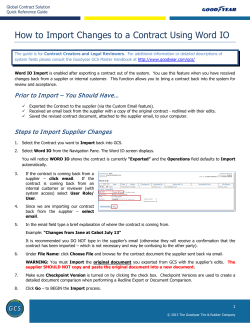





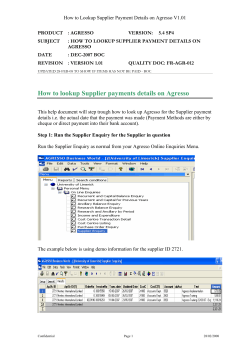
© Copyright 2026